
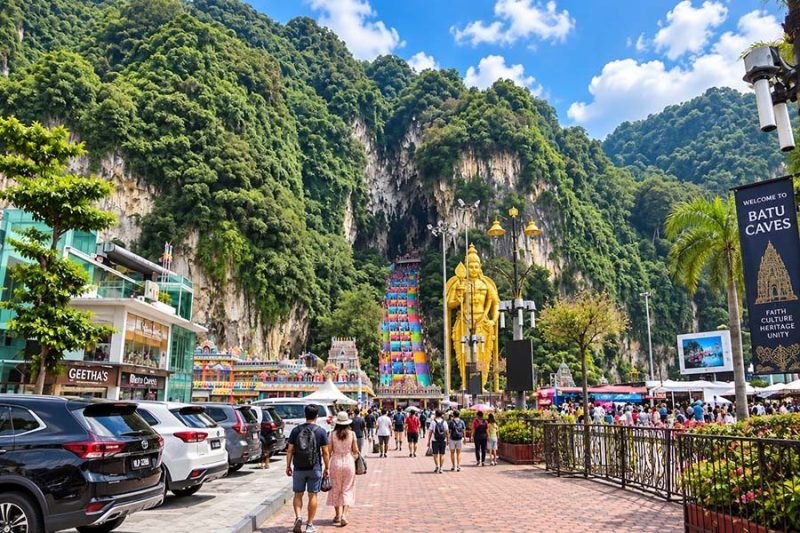
1.Limestone Caves & The Hindu Statue
The Limestone Formation: The dramatic karst hills housing Batu Caves are estimated to be around 400 million years old. The main attraction, the Temple Cave, sits high up inside a massive cavern filled with ornate Hindu shrines.
The Giant Lord Murugan Statue: Towering at 43 meters (141 feet) tall right at the base of the complex, this is the world's tallest statue of Lord Murugan and the second-tallest Hindu deity statue globally. Coated in over 300 liters of gold paint, it serves as a breathtaking guardian welcoming millions of visitors.
2. Why Many People Visit There Every Year
Cultural and Spiritual Landmark: It is one of the most popular Hindu shrines outside of India, serving as a deeply sacred pilgrimage site for devotees worldwide.
Stunning Architecture & Natural Wonders: Tourists flock here to marvel at the sheer scale of the cathedral-like limestone caverns, stalactites, and vibrant wall paintings of Hindu deities.
Wildlife Experience: The site is heavily populated by lively long-tailed macaques, adding a unique, interactive element for wildlife and nature lovers (though visitors are advised to guard their food and belongings!).
3. How Many Stairs Are There & How High?
Stair Count: There are 272 concrete steps leading from the base plaza up to the main Temple Cave. (Famously painted in striking rainbow colors, making it an iconic photography spot).
Height/Elevation: The staircase climbs approximately 100 meters (328 feet) vertically up the sheer cliff face.
4. When Is the Hindu Celebration There?
The Festival: The main Hindu celebration held at Batu Caves is Thaipusam, a major festival dedicated to Lord Murugan to celebrate the triumph of good over evil.
Timing: It takes place annually during the Tamil solar month of Thai (which typically falls in late January or early February).
The Spectacle: During this time, the grounds come alive as over a million pilgrims and spectators gather. Devotees climb the 272 steps barefoot, many carrying milk pots or elaborate ritual frameworks called kavadis as acts of penance and devotion.
5. Other Important Details
Location: Situated in the Gombak district, roughly 13 kilometers north of central Kuala Lumpur, making it easily accessible via a short 30-minute ride on the KTM Komuter train.
Admission: Entrance to the main Temple Cave and plaza is free (though minor fees apply for adjacent specialized tours like the Dark Cave conservation tour).
Visitor Etiquette: Because it is a functioning sacred religious site, visitors are expected to dress modestly (shoulders and knees covered).